ARCCAN presents an art museum concept for Berlin that treats shadow and light as primary building materials. Conceived as a calm civic presence, the project is organized as a family of monolithic volumes carved by courtyards, recessed entrances, and precisely framed openings. Rather than relying on expressive geometry alone, the architecture aims for a measured atmosphere—where material weight, proportion, and controlled daylight shape the visitor’s pace.
Learn more about this project Here
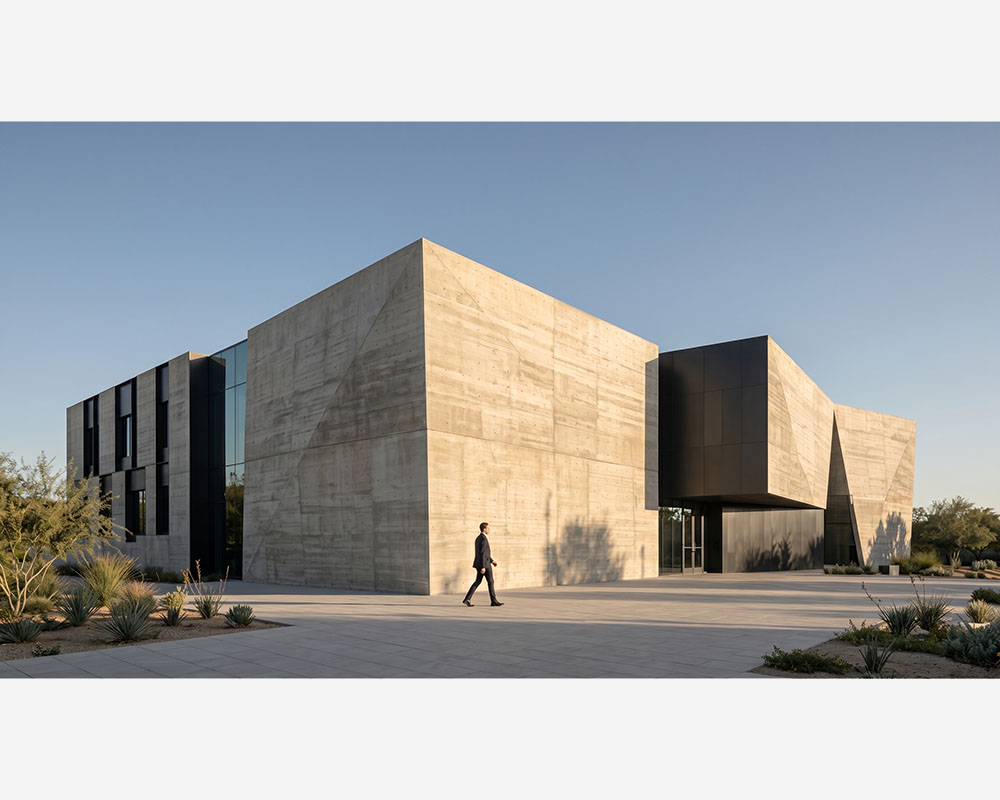
Berlin Art Museum Concept – (source: ArcCAN)
A Brutalist framework with a quiet civic identity
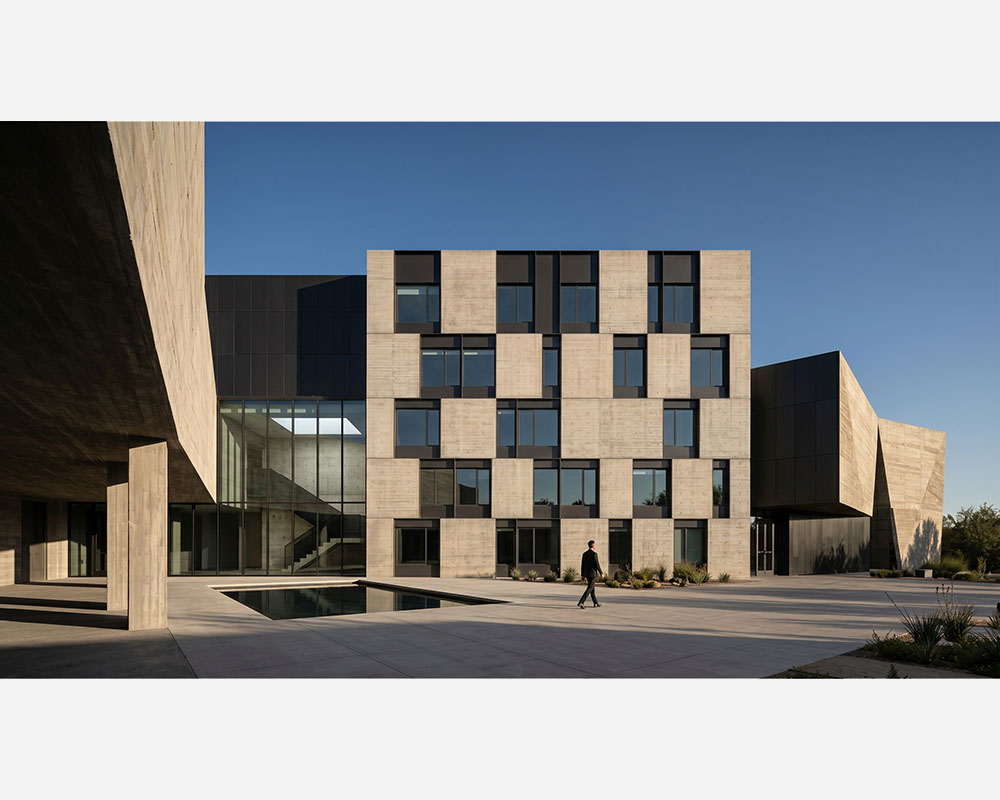
The museum’s massing is intentionally restrained: large, board-formed concrete planes establish a durable, institutional character, while darker cladding elements and glazed cuts introduce contrast and legibility. From a distance, the building reads as a composed block; on approach, the façade reveals depth through shadowed reveals and shifting window rhythms. This approach positions the project within a lineage of beautiful architecture that prioritizes clarity and permanence—qualities often sought in cultural institutions.
Light as a curatorial tool
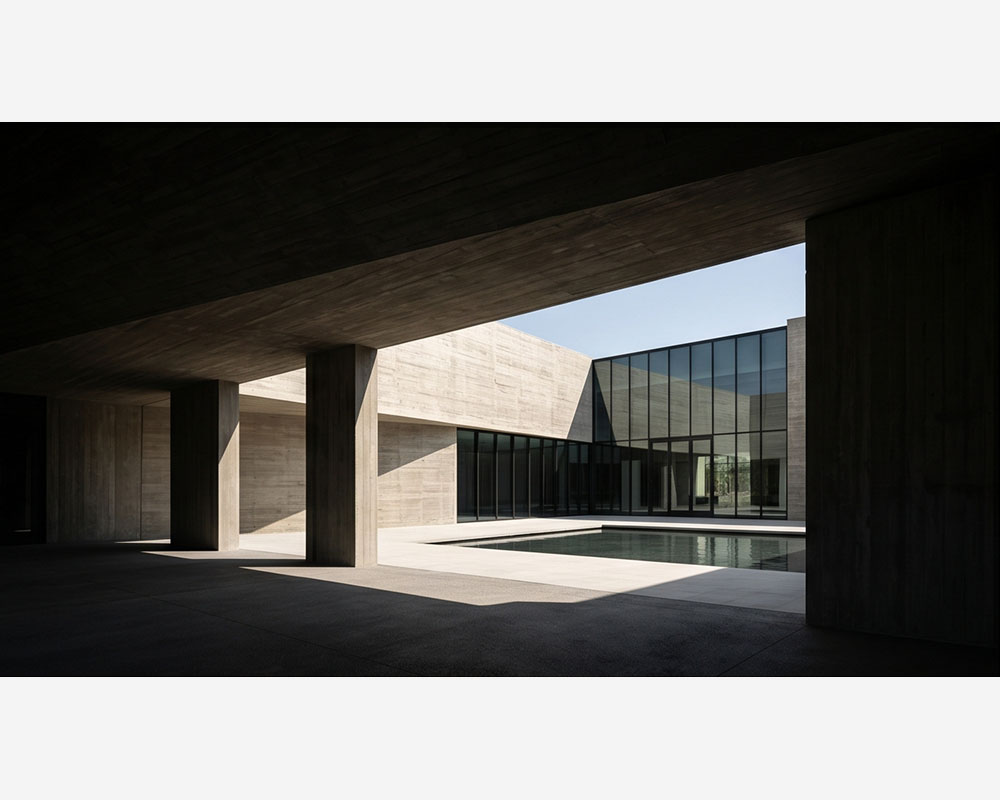
In this concept, light is not an afterthought—it is part of the exhibition strategy. Skylights and deep-set apertures are imagined to soften direct sun, producing gradients rather than glare. As visitors move through the museum, sequences of brightness and dimness create thresholds: exterior to interior, public to quiet, circulation to gallery. The intent is to support contemplation, allowing art to remain central while the building subtly guides attention.
Courtyards and reflective surfaces (as conceptual elements) further amplify this daylight strategy. Instead of uniform illumination, spaces are proposed to feel distinct—some more intimate and hushed, others open and luminous—so that the museum experience becomes a curated progression rather than a repeated room-and-corridor pattern.
The “in-between” spaces: where the museum becomes a place
Beyond galleries, the project emphasizes transitional spaces—entries, landings, and framed views that orient visitors and create moments to pause. These are the areas where a museum often becomes a social institution: where people gather before a lecture, where a student group regroups, where a visitor simply sits and looks back across a courtyard. In ARCCAN’s proposal, these connective moments are treated as architectural destinations, not leftovers.
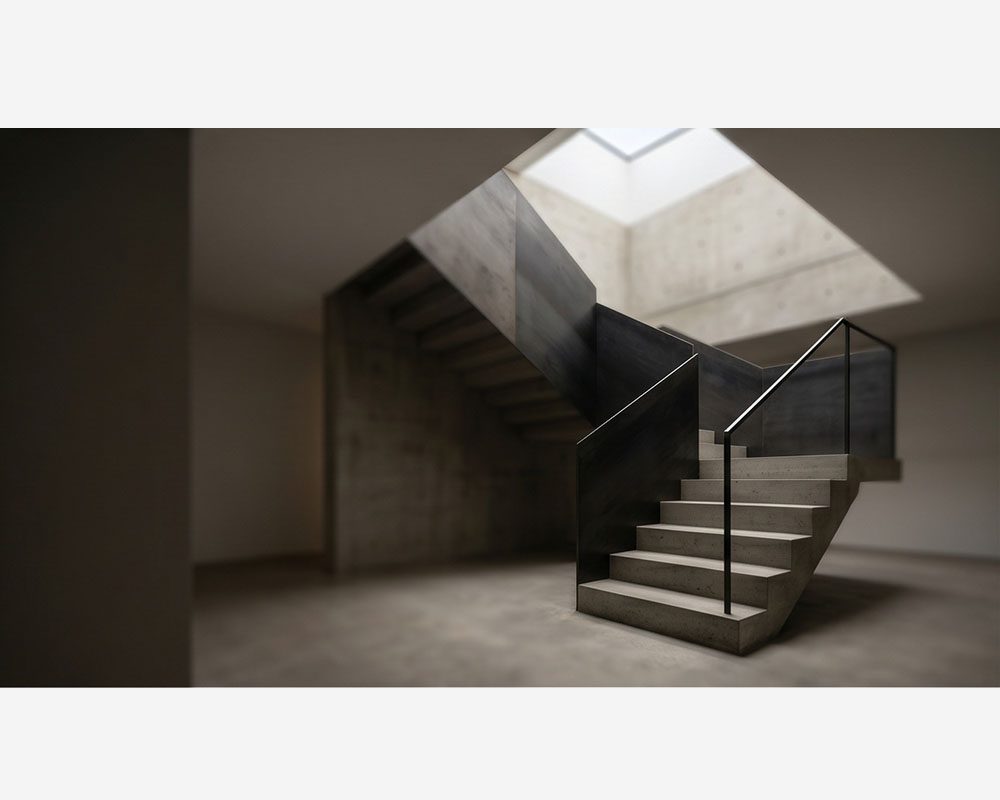
A stair sequence is conceived as a spatial highlight, using controlled overhead light and heavy surfaces to create a meditative procession. The goal is to make circulation itself an experience—calm, legible, and quietly dramatic.
Relevance beyond Berlin: cultural institutions in Canada
While the site is Berlin, the underlying questions resonate across Canada, including Toronto and Brantford, where cultural organizations continue to evolve—balancing accessibility, flexibility, and long-term civic value. This concept explores how a museum can feel welcoming without losing gravitas: strong forms that communicate permanence, paired with warm daylight, clear routes, and a human-paced sequence of spaces.
For clients considering museum expansion, gallery design, or a new cultural institution, the project offers a design position: museum design works best when architecture sets the conditions for art—through light control, material restraint, and carefully scaled public spaces—rather than competing for attention.